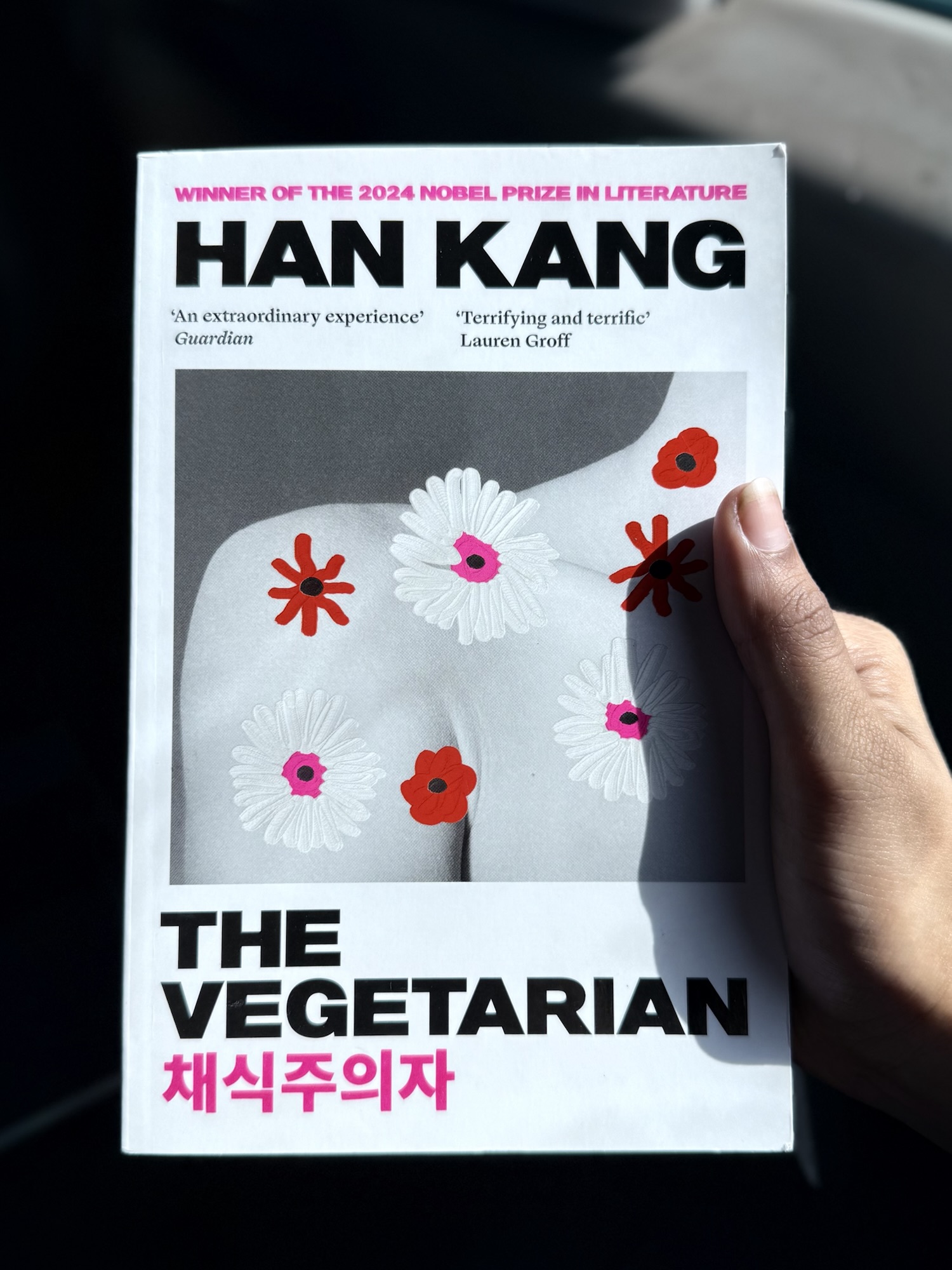

So, have you read The Vegetarian? No? Well then, this post isn’t for you. Keep scrolling.
For those of you who did; what did you think it meant for her to “disintegrate” as a person? To go from a typical Korean woman, a devoted wife, to someone so consumed by a single ideal that all she wanted was to become a tree. To stand on her hands in a field of flowers and find, in that failure, something close to peace.
Do I know what Han Kang intended? No. Do I agree with the common interpretation? Also no. Which is, if you’ve stumbled onto this blog by accident, quite characteristic of me.
The story is deceptively structured. At first glance, and to the amateur reader, it seems straightforward. A woman stops eating meat. A marriage unravels. A mind comes apart. It is anything but. The timing of her past being revealed is almost deviously intelligent. Because until you know what she survived, all you see is a woman falling off an abyss into utter madness. And that’s exactly the point.
Her aversion to meat had nothing to do with animals. It had everything to do with what was done to her. She didn’t stop eating meat because she pitied them. She stopped because she recognised something.
This is not a story about a woman’s descent into madness. It is a story about a woman who felt so rotten at her core that the only way she knew to get rid of the stench was to starve it out. First meat. Then nourishment entirely. Then the body itself. She let her sister’s husband paint her with flowers and leaves and she wouldn’t wash it off, because for the first time, her skin felt like something other than the site of everything that had been done to her. She had gotten a taste of what it meant to not be flesh. To be rooted instead of ruined.
The stench of meat wasn’t from animals. It was her own.
She didn’t want to disappear. She wanted to become something that had never been made of flesh at all.
Song of the day: Nutshell by Alice in Chains

